EU WELL ON THE WAY TOWARDS HARMONIZED FIRE STATISTICS
The way in which fire safety statistics are recorded across Europe varies greatly. However, key steps have been taken to change this, thanks to the EU FireStat pilot project “Closing data gaps and paving the way for pan-European fire safety efforts”, an EC funded project, supported by the Modern Building Alliance (MBA) and other industry stakeholders, such as EuroFSA 1; concluded in 2022.
Herewith, a historic step forward was made as EU Member States will soon start collecting data in a harmonized manner. Common reliable data is essential to better understand fire causes and to identify and implement additional fire safety measures. This helps the authorities in making informed decisions based on verifiable data.
THE PILOT PROJECT OUTCOME
The final report of the pilot project was published in October 2022. An important outcome is the description of a future data collection method for fire statistics in EU member states. It identified the collection difficulties and interpretation differences and thereafter, proposed a common terminology and a method to collect the necessary data across the EU member states.
It is recommended in the report that “there should be a structure that can act at a European level that collects national fire statistics on an annual basis, with the necessary resources to store, analyse and publish data from the various countries. Such a structure still needs to be created or identified in the follow-up stages of this pilot project.”
Secondly, it further is recommended that the definitions and methodologies proposed in the pilot project should undergo a standardisation process via an official standardisation body which provides a recognised basis and facilitate its dissemination to all EU Member States or even internationally.
In February 2026 the second phase of the EU FireStat project was started. This step will allow implementation of the recommendations of the final report from the pilot project.
“Building on the findings of the pilot project, the European Parliament decided to continue the development with preparatory action and mandated the Commission to organize and manage the work. The project “Harmonized fire statistics as a tool for enhancing pan-European fire safety efforts” (EU FIRESTAT 2) will test and refine the framework developed in the pilot project. The outcome will be a workable, tested system for collecting and utilizing fire safety data at all authoritative levels (national, regional and local levels)”, See project website https://eufirestat-efectis.com/
The Modern Building Alliance welcomes the progress towards harmonized fire statistics in the EU.
COMMON TRENDS IN SOME EU COUNTRIES
Available data confirm old and highlight new fire trends in some member states. Some examples are given further in this section. It should be noted however that comparing national fire statistics is problematic because member states have different definitions. In the absence of agreed common data definitions and collection methodologies, comparing the fire statistics of different countries should be carried out with great care.
Common National Statistical Data
- Start of fires
The Nederlands Instituut Publieke Veiligheid (NIPV) reported that four in ten fatal home fires start in the living room. Fatal fires mainly start in the bedroom and the kitchen. First items to burn include a chair or sofa, clothing or textiles and electrical appliances2.
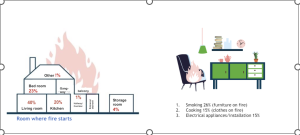
Fig 1: Room where fire starts and cause3
“Data from Germany, the UK, France and to some extent Poland, demonstrate that approximately half of accidental domestic fires have an electrical source. Therefore, electrical safety is an important aspect to deal with, e.g. through regular maintenance and inspection”4.
UK fire statistics for 2025 indicate that cooking appliances were responsible for the highest proportion of accidental dwelling fires and casualties, whereas smokers’ materials accounted for the greatest share of fire-related deaths. Of the 22,877 accidental dwelling fires, 29% were caused by ‘misuse of equipment or appliances’, compared to 31% in the year ending March 2022. Cooking appliances were the largest ignition category for accidental dwelling fires, accounting for 44% of these fires, but only 9.7% of the fire-related fatalities5.
- Ageing population and fire risk
It is relevant to note that age is an important determinant of survival in fires because the likelihood of dying in a fire generally increases with age6. More than 60% of the residential fire deaths in the Netherlands involve people above 50 years of age7. In 2020, Spain recorded an increasing death rate trend with increasing age, shown in Figure 2 below. It is consistent with earlier research proving that elderly people are much more likely to die in fire8. This is because elderly people are often less mobile and are more likely to be stuck in danger for several reasons.
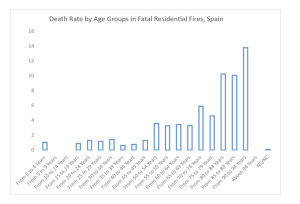
Figure 2. Death rate for different age groups in residential fires (Fundación MAPFRE, 2020)
In the UK, in the year ending March 2025, 39% of all fire-related fatalities in England were people aged 65 years and over. This was a similar proportion to the previous year (40%). The fatality rate was 7.9 fatalities per million people for those aged 65 to 79 years old and 13.8 fatalities per million people for those aged 80 years and over9.
Age and gender differences also play a crucial role in most fires, being residential or wildfires. It has been well-documented in research literature that gender norms and division of labor play a role in varying exposure to risk for different genders10.
Prevention is the key driver for further reduction in fire fatalities
Prevention is multi-faceted. It involves building design, including passive and active fire prevention systems building and building services maintenance (such as gas and electrical appliances); the strict enforcement of laws that govern fire prevention; and social issues related to fire risks (drug and alcohol abuse, for instance). Provisions for early warning of fires are essential. For example, smoke detectors allow critical additional time for escape. Every year the EU Fire safety week includes a European smoke alarm day for education and prevention. See link for more info.
The share of government expenditure on fire protection as a ratio of total expenditure varies among EU countries. In 2021, general government total expenditure in EU countries on fire protection services 11 amounted to €34.1 billion, representing a 2.5% increase compared with 2020. The Modern Building Alliance supports improved allocation of funds to fire protection, but most especially towards fire prevention throughout the EU member states.
Finally, training and education on fire safety in the home, evacuation drills in tall buildings, learning from other countries’ successes, etc., can further reduce fire fatalities.
Toward more harmonized European fire statistics
Fire casualties and ignition sources can only be understood based on common reliable data. While each member state has developed its own data collection system, harmonized statistics as well as common definitions and methodologies at EU level are needed to better analyze the causes of fires and to identify the most efficient fire safety measures. The Modern Building Alliance hereby encourages more member states to join the effort of collecting fire data in a harmonized way.